
Reading Lan Ha Bay history from the water
Lan Ha Bay history is rooted in the Cát Bà area’s long human presence and its maritime livelihoods. UNESCO describes archaeological evidence of settlement in the area dating back at least 6,000 years. That regional history provides context for a boat journey today, while the floating homes and fish-farming structures belong to living communities whose present form should be considered separately from the archaeological record.
Lan Ha lies in the Cát Bà area of Hải Phòng, within a landscape of limestone islands, rock walls and sea passages. A visit can bring the working water landscape into view alongside the scenery. Start with the difference between evidence of early settlement, current fishing and aquaculture, and more recent tourism development. Each helps explain what you see, without assigning an ancient construction date to a house or a continuous age to a village.

Cái Bèo: homes, boats and aquaculture
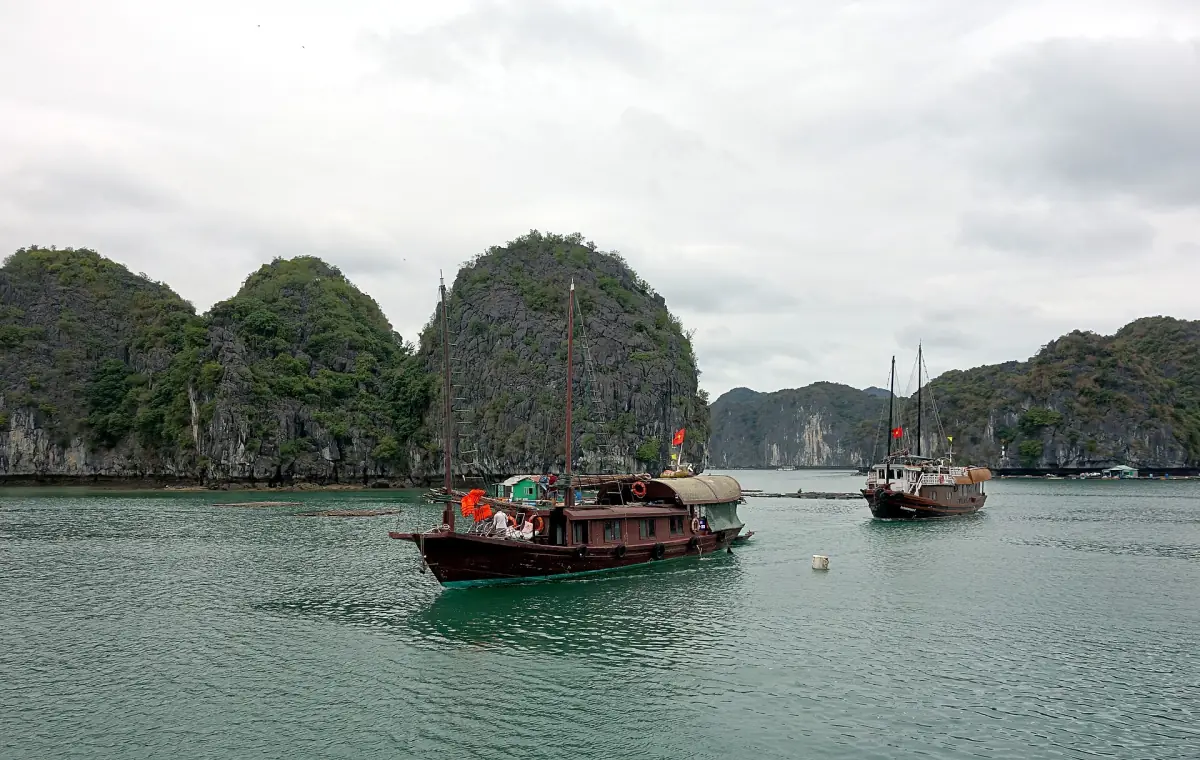
Cái Bèo is a floating village encountered on documented bay programmes. Floating homes and fish enclosures are part of its visible setting; UNESCO identifies fishing and aquaculture as important economic activities in the biosphere reserve. Read the village as a place of livelihoods rather than as scenery arranged solely for passing boats. Housing, work and visitor traffic share the water landscape.
On a cruise, look at the relationship between homes, boats and enclosures rather than expecting a formal museum route. A passage through Cái Bèo offers an introduction to that environment. It differs from visiting a floating market, and an English-speaking cruise guide does not by itself turn a normal boat outing into a specialist archaeology or history tour. For route choices, see the islands and village-stop guide.
Trip to Cai Beo
This boat trip visits Cai Beo floating village but is not a specialist history tour.
Hand-picked tours, booked through GetYourGuide. Prices are indicative starting prices in US dollars (as of October 2026). Tap a tour for live availability and the current price in your currency.
See Cái Bèo from a bay boat
An afternoon cruise through Lan Ha and Cái Bèo combines floating-village scenery with guiding, entrance tickets and tea with fruit and pastries.
A boat visit with a concrete Cái Bèo connection
The featured afternoon boat trip includes a cruise through Lan Ha and Cái Bèo, an English-speaking guide, entrance and sightseeing tickets, and pickup and drop-off within central Cát Bà town. Tea, fruit and pastries or cakes are included in its sunset-party element. This is a practical way to connect the village setting with the surrounding bay, while keeping the programme’s purpose clear.
The programme advertises kayaking, but paddling depends on the operating restrictions and the arrangements for that departure. Review the kayaking status and choose the boat visit for the scenery and village connection as well. A sunset-party label describes refreshments and an onboard programme, rather than a guarantee that the sun will be visible. The afternoon cruise guide explains that format in more detail.
Biosphere reserve in 2004, World Heritage extension in 2023
Cát Bà became a UNESCO biosphere reserve in 2004. In 2023, Cát Bà was added through a significant boundary extension to the World Heritage property now named Ha Long Bay and Cat Ba Archipelago. These are different designations and milestones. When reading a cruise description, distinguish the conservation history of the region from the name used to sell a particular route.
The World Heritage property protects a sea-flooded limestone karst landscape across Quảng Ninh and Hải Phòng. Its wider geographic scope matters: a claim about the entire property should be read at that scale. For a Lan Ha visit, the useful link is between the maritime setting you travel through and the broader landscape under protection, rather than treating each bay as a separate newly inscribed UNESCO site.
Việt Hải and community tourism
Việt Hải is a village in the national park and a stop in some bay programmes. Its recognition as a community tourism destination was decided on 19 June 2025 and publicly announced on 14 August 2025. This is a tourism-recognition milestone, rather than the foundation date of the village. It places present visitor development on a different timeline from the archaeological history of the wider area.
A cruise village stop may involve arrival at the pier followed by cycling or an electric vehicle and a walk, according to the selected programme. Keep that visit distinct from the experience of floating homes at Cái Bèo. One is a village excursion reached from the boat route; the other is part of the bay’s working water landscape. The day-cruise guide helps compare those itinerary elements.
Ba Trái Đào and local storytelling
A September 2025 local press account relates the name Ba Trái Đào to limestone rocks resembling three peaches and recounts a fairy legend. Treat it as a local story: it can add a cultural layer to the landscape without becoming a historical explanation of how the islands formed. The attraction of the tale is different from the evidence used for settlement or heritage dates.
For planning, a name or a story also tells you little about a permitted landing. Choose the itinerary for the stops it actually describes and follow the crew’s decisions about water access. Combining the visit-fee information with practical route information makes the visit easier to understand: you can appreciate both the inhabited bay and the landscape while respecting the distinction between a working community, a tourism programme and a local legend.
Questions before you go
Is today’s Cái Bèo village 6,000 years old?
The archaeological statement concerns human settlement in the wider Cát Bà area. Keep that regional evidence separate from the present floating village.
What happened in 2004 and 2023?
Cát Bà became a UNESCO biosphere reserve in 2004. The World Heritage property was extended to include Cát Bà in 2023.
Is the boat offer a specialist history tour?
It is a bay and Cái Bèo boat visit with an English-speaking guide, entrance tickets and refreshments, rather than a dedicated archaeology programme.